
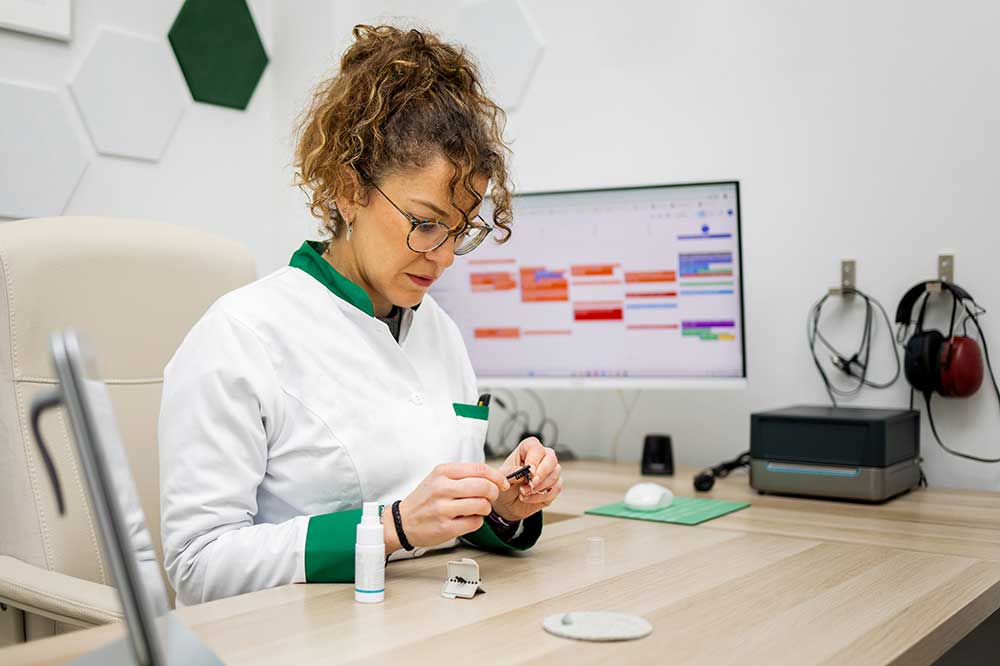
Hearing aids spend all day in a warm, waxy environment, and even a thin layer of buildup can dull the sound you rely on. A steady hearing aid cleaning routine keeps your devices working well and prevents the frustration of wax and moisture interfering with sound.
Audiologist Jennifer Lane, MA, at Southside Hearing Care can show you how to care for your specific devices and explain when they need professional cleaning or maintenance. Using the right tools and methods for daily and weekly hearing aid cleaning helps maintain comfortable listening and remove buildup without making the problem worse.
How Often Do I Need to Clean My Hearing Aids?
You need to clean your hearing aids every day with a gentle wipe and give them a closer inspection about once a week. Daily care removes surface residue before it builds up around the microphone openings, earpiece, and sound outlet. Choose a consistent time, such as after taking them out at night.
Follow your model’s instructions for the weekly inspection. You may need more frequent attention if you produce a lot of earwax, perspire heavily, or spend time in humid conditions.
Wax filters, domes, and tubing have their own replacement schedules. Check them regularly and replace them as needed or as directed, rather than relying on a single universal calendar.
Professional cleaning should supplement home care. Ask Jennifer Lane how often to return based on your devices, wax buildup, and previous maintenance needs.
Does Hearing Aid Care Change for Behind-the-Ear and Custom Styles?
Hearing aid care does change by style, because behind-the-ear, receiver-in-canal, and custom in-ear devices place their tubing, speakers, and openings in different spots. Traditional behind-the-ear hearing aids may send sound through hollow plastic tubing to a separate earmold. Some earmolds without electronics can be detached and washed if the manufacturer permits it. Keep the electronic hearing aid body out of water.
Receiver-in-canal hearing aids have a speaker inside the earpiece, connected to the behind-the-ear body by a thin wire. Wipe these components carefully and follow the specific instructions for dome and wax-filter care.
In-the-ear, in-the-canal, and completely-in-canal devices sit partly or entirely inside the ear. Their surfaces, vents, and sound outlets are exposed to wax and skin oils. Small openings require gentle handling and the appropriate cleaning tools.
If you are unsure whether an earpiece contains electronics, ask before detaching or washing it. Similar-looking parts can require different care, and your model’s instructions should guide the process.
What Steps Belong in Your Everyday Hearing Aid Cleaning?
Your everyday hearing aid cleaning should include turning the device off, wiping and inspecting it, brushing the microphone openings, and finishing with the recommended drying, storage, or charging routine. Start with clean, dry hands and work over a clean towel on a stable surface. Handle one hearing aid at a time so you can keep track of its parts. Follow these steps:
- Turn the device off using its normal controls.
- Wipe the casing and earpiece with a soft, dry cloth.
- Inspect the dome, earmold, and sound outlet for visible buildup.
- Gently brush across microphone openings, directing debris downward.
- Check charging contacts or accessible battery areas as instructed.
- Follow the recommended drying, storage, or charging routine.
Wax may be easier to brush away after drying overnight. You can complete that step the next morning if needed.
For disposable-battery models, instructions may include opening the battery compartment overnight. Rechargeable aids follow a different routine; do not try to open a sealed battery compartment.
Before wearing the aids again, check that removable earpieces are securely attached and the devices are dry.
How Do You Handle Wax Filters and Tubing During a Weekly Check?
During a weekly check, look for persistent wax, blocked wax filters, worn domes, and stiff, cracked, or discolored tubing, and replace damaged parts rather than cleaning them further. This closer inspection reaches areas that need more attention than a quick wipe.
Change a wax filter when required, using the exact type specified for your device. Don’t assume every filter needs weekly replacement. Use a vent cleaner or wax loop only in the locations Jennifer Lane has demonstrated.
If washing a detachable earmold is permitted, disconnect it as instructed, use the approved washing method, and let it and any washable tubing dry completely before reconnecting.
Inspect your charger and remove dust or residue according to its instructions. If buildup remains difficult to remove or sound stays weak, arrange professional service.
What Should Indianapolis Hearing Aid Wearers Never Do When Cleaning?
Indianapolis hearing aid wearers should never soak the electronics, use unapproved chemicals, push tools into openings, or expose devices to heat. Do not immerse the electronic hearing aid or a speaker-containing earpiece in water. A water-resistance rating does not automatically mean the device can be washed.
Avoid household detergents, rubbing alcohol, peroxide, and other chemicals unless your manufacturer explicitly approves a particular product and method. Even a cleaner marketed for hearing aids may not suit every component. Never spray cleaner directly into openings.
Do not insert needles, pins, or improvised tools into microphone ports or sound outlets. Pushing harder can drive wax inward or damage the parts you are trying to clean.
Keep hearing aids away from hair dryers, microwaves, and other excessive heat sources. Never dismantle the casing for a deeper clean. If a part will not detach easily or you are unsure what it is, stop and ask for guidance.
Schedule Hearing Aid Maintenance With Jennifer Lane in Indianapolis
Hands-on guidance makes hearing aid care easier to keep up with. During an appointment, Jennifer Lane can review your devices, hearing concerns, health history, and goals for comfortable daily use, then show you the cleaning steps your model needs. When a device needs more than a cleaning, our team can often handle repairs right in our office.
Call 317-720-1989 or send us a message to book a hearing aid care appointment at our south side office on Commerce Square Drive.